Installation by your preferred plumber or Wates
Wates teams can install outside core occupancy windows to minimise tenant-facing disruption.
 PROJECT DASH
Funded by Ofwat | Water Efficiency Lab (WEL 1)
100% Fully Funded Innovation Trial • Strictly Limited to 30 UK Buildings
Using data to find and fix hidden water leaks. Project Dash equips 30 qualifying UK commercial buildings with smart sub-metering, wire-free occupancy sensors, and insurance-backed risk validation at no cost.
Backed by leading delivery, insurance, academic, and water-sector partners
Operational assurance
Built to protect uptime, tenant comfort, and compliance from installation through ongoing operation.
Wates teams can install outside core occupancy windows to minimise tenant-facing disruption.
Typical isolation windows stay below 60 minutes per zone during controlled intervention.
Zero-camera, zero-audio spatial sensing with 100% GDPR-compliant data handling controls.
Abnormal system-behavior visibility strengthens Legionella routines and escalation response.
Solution ecosystem
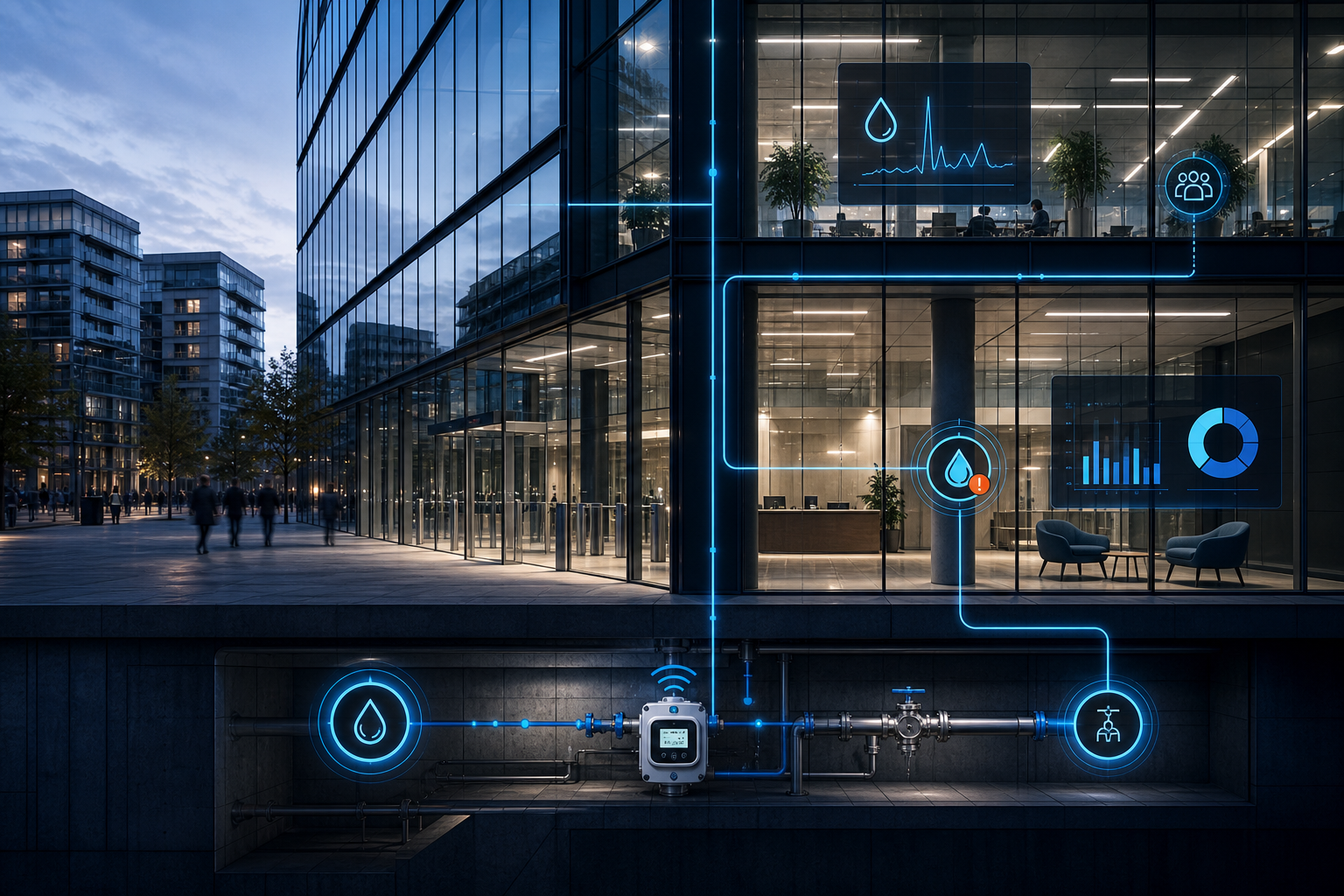
By mapping room-level occupancy patterns against sub-metered water movement, Project Dash isolates hidden leaks, flags abnormal out-of-hours baseloads, and identifies stagnation risks linked to dead legs. The result is faster validation, clearer triage, and practical actions teams can schedule without disrupting tenants.
Detect
Leak and waste anomalies
Validate
Occupancy-aware checks
Act
Insurer-aligned response
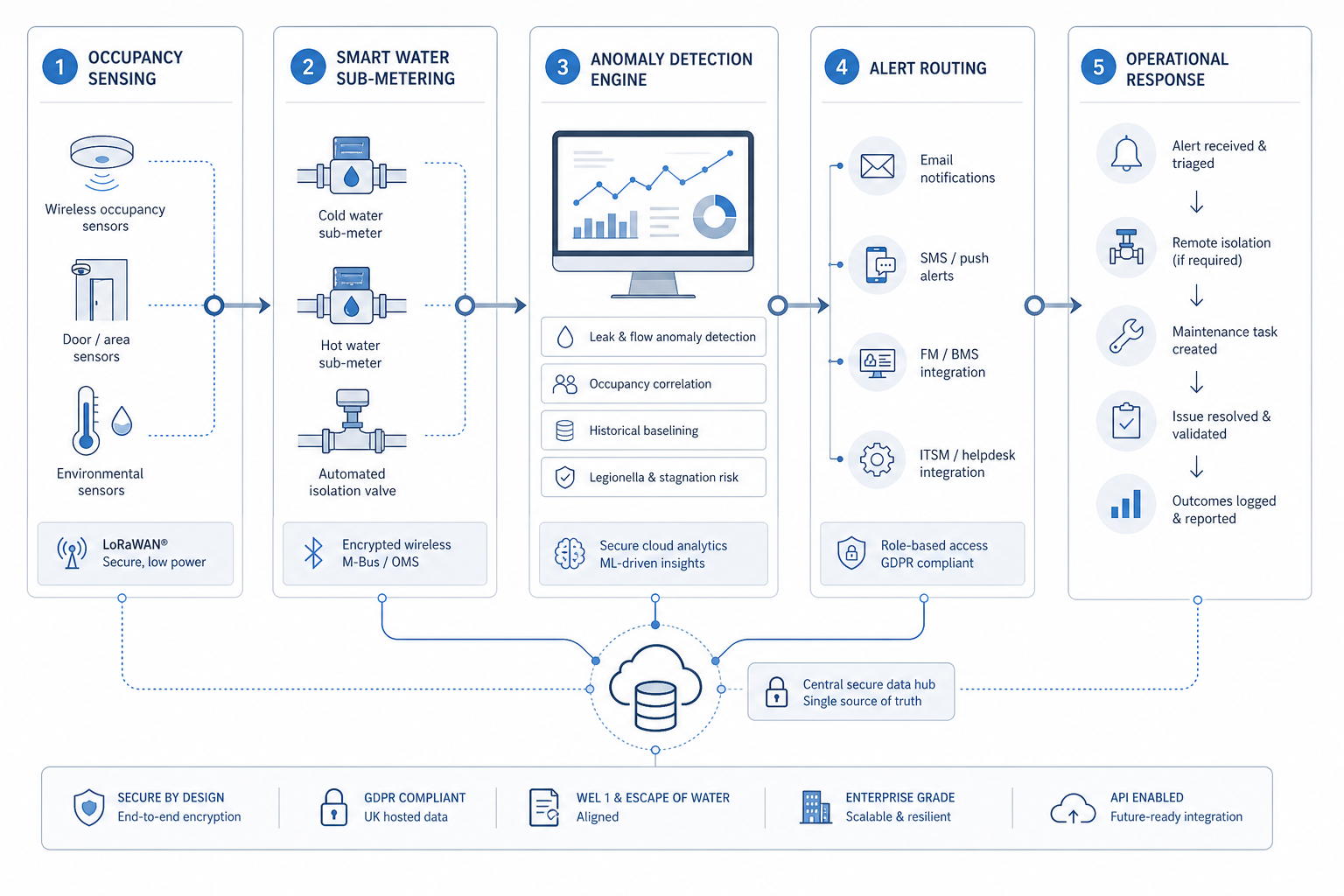
Wire-free room signals show whether water use matches real occupancy patterns.
High-frequency flow data surfaces abnormal baseload and hidden loss routes early.
Combined occupancy and flow logic filters noise and elevates credible anomaly events.
Out-of-hours install, maintenance, and escalation pathways keep operations uninterrupted.
Water Management Plans convert alerts into insurer-aligned actions and audit-ready records.
Four reasons internal teams can back quickly, with funded delivery and measurable operational upside.
£10,000+
Funded smart water infrastructure per selected building.
18 months
National trial participation through December 2027.
10%–30%
Potential water and heating energy reduction.
Permanent
Installed plumbed hardware stays after the trial.
Participation pathway
A controlled three-step process takes you from nomination to live monitoring without adding operational disruption for your teams or tenants.
Submit core site details and current water-risk priorities. We quickly confirm whether the asset fits trial criteria.
A short technical check validates metering points, occupancy profile, and access windows before onboarding.
Installation is coordinated for low-impact windows, then monitoring starts with ongoing support and reporting.
Shortlisted buildings move through a guided process with named delivery partners, including Wates installation teams, Aviva-backed risk planning support, and the wider Project Dash consortium.
Eligibility
Project Dash is designed for operational UK commercial buildings where teams want practical water-risk control with minimal disruption.
Building profile: A UK commercial site (offices, education or care) with active facilities or estates management in place.
Stakeholder commitment: A responsible decision-maker is willing to nominate and support trial participation.
Operational access: The site can provide coordinated access for professional installation activity.
Risk priority: Your team is actively looking to reduce hidden leaks, water waste, and Escape of Water exposure.
Monitoring value: You want practical monitoring insights and reporting to support operations, compliance, and ESG evidence.
Limited cohort note: Only 30 qualifying UK commercial buildings will be selected nationally.
Operational FAQ
Practical responses to the final questions teams usually ask on disruption, privacy, commitment, and insurer-backed risk reduction.
Delivery is designed for occupied buildings. Installation is planned with your site team and completed out of hours wherever practical, so tenant activity and core operations continue as normal.
Isolation windows are short and scheduled in advance per zone. Your building team receives a method statement and timing plan beforehand, with contingency routing agreed where critical services must remain available.
Sensors indicate presence states, not identity. The trial is configured to avoid personal data capture, with governance documents and data-handling controls reviewed during onboarding with your compliance stakeholders.
Trial participants retain the installed asset base unless agreed otherwise. End-of-trial options, ongoing support terms, and handover responsibilities are documented up front so there is no ambiguity for estates or procurement teams.
It translates live building data into clear controls: leak response paths, isolation procedures, monitoring thresholds, and maintenance priorities. That structure helps reduce Escape of Water exposure and strengthens insurer and governance conversations.
Need a building-specific view? Book a 15-minute feasibility call.
Project Dash · Closing actions
Nominate a qualifying building today, or download the essential documents for internal review before your feasibility call.
A concise overview of trial scope, funded components, and selection criteria for rapid stakeholder circulation.
Download PDFDetailed briefing for FM, estates, risk, and ESG teams covering deployment, governance, and reporting expectations.
Download PDF